
Printing materials are the papers, boards, films, vinyls, fabrics and rigid sheets used to produce printed products. The right material affects how colours appear, how a product feels, how long it lasts and whether it works in its intended environment. For businesses in Kuwait, the best choice depends on the application, indoor or outdoor exposure, print method, finishing, quantity and budget—not simply on choosing the heaviest or most expensive stock.
This practical guide explains the main types of printing materials, where each is commonly used and what to check before placing an order. Use it to brief your designer or printing company with clearer specifications.
Quick answer: which printing material should you choose?
Choose paper or cardstock for documents, flyers, brochures and cards; adhesive vinyl or label stock for stickers and product labels; banner media, printable vinyl or fabric for large displays; rigid boards for signs and display panels; and kraft, folding carton or corrugated board for packaging. The correct option is the one that matches the product’s use, expected lifespan, surface, print process and finish.
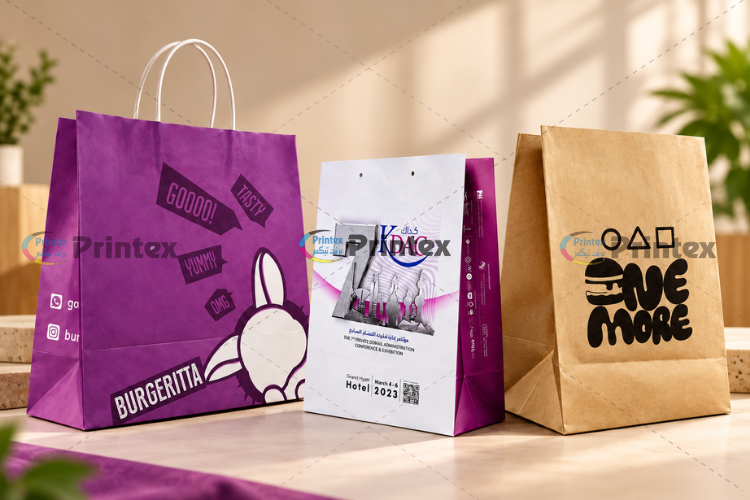 Printing materials
1. Paper and cardstock printing materials
Paper is one of the most common printing substrates. It is available in different weights, surfaces, colours and levels of stiffness. The best paper for a project depends on whether the priority is readability, colour reproduction, writing, folding, durability or a premium feel.
Coated paper: gloss, silk and matte
Coated paper has a treated surface that is generally smoother than uncoated stock. It is often selected for image-heavy brochures, flyers, catalogues, product sheets and promotional materials. Gloss has a reflective shine, silk offers a softer sheen, and matte has a low-glare appearance. The finish should support the design and reading experience—not just look attractive on a screen.
Uncoated paper
Uncoated paper has a more natural surface and is often a good choice for letterheads, forms, notebooks, book interiors and stationery that people need to write on. Colours can look less vivid than on a suitable coated stock, so check a printed proof when colour matching is important.
Cardstock and paperboard
Cardstock is heavier and more rigid than ordinary text paper. It is commonly used for business cards, postcards, invitations, menu covers, presentation folders and some packaging. A printed sheet may also be laminated or finished with foil, embossing or other processes when the design and production method allow it.
2. Understanding GSM: paper weight is not the same as thickness
GSM means grams per square metre. It describes the mass of a square metre of paper or board. A higher GSM usually means a heavier stock, but GSM does not give an exact measurement of thickness. Two papers with the same GSM can feel different because their fibre structure, density and coating may differ.
| Indicative paper weight | Common applications | What to consider |
|---|---|---|
| 75–100 GSM | Office documents, forms and book inner pages | Readability, opacity and printer compatibility |
| 115–170 GSM | Flyers, leaflets and brochure pages | Image quality, folding and handling |
| 200–250 GSM | Heavy flyers, inserts and selected covers | Stiffness, scoring and finishing |
| 300–350 GSM | Business cards, invitations and premium cards | Feel, edge quality and lamination |
These are general planning ranges, not fixed rules or a promise that every weight is available for every print process. Ask the printer to confirm the actual stock, thickness, finish and compatibility. For book projects, the inside pages and cover can use different materials; see Printex book printing for the production options relevant to your project.
3. Sticker, label and synthetic printing materials
When a printed item needs to stick to glass, packaging, plastic, metal or another surface, the adhesive system is as important as the printable face material. A sticker is not just a design printed on a sheet: it is a combination of face stock, adhesive and release liner.
Adhesive vinyl
Printable adhesive vinyl is widely used for decals, window graphics, product branding and selected indoor or outdoor applications. Ask whether the job needs permanent or removable adhesive, the type of surface it will be applied to, and whether a compatible protective laminate is recommended. A material suitable for a smooth indoor surface may not be the right choice for a textured wall or long-term outdoor use.
Label stock and synthetic paper
Labels may use paper, polypropylene (PP), polyester (PET) or other face materials. Paper labels can suit dry indoor packaging, while selected synthetic stocks are designed for greater resistance to moisture, tearing or handling. Performance varies by product, adhesive and print system. For food, cosmetic or other regulated packaging, confirm the required labelling and material compliance separately; do not assume that a printable label is automatically approved for direct food contact.
Before ordering stickers, confirm the label size, shape, roll or sheet format, application surface and expected conditions. You can explore sticker printing options at Printex and request a proof before production.
4. Large-format printing materials for banners and displays
Large-format printing uses roll or sheet media designed for display graphics. The right choice depends on viewing distance, lighting, display structure, installation method and how long the graphic needs to remain in place.
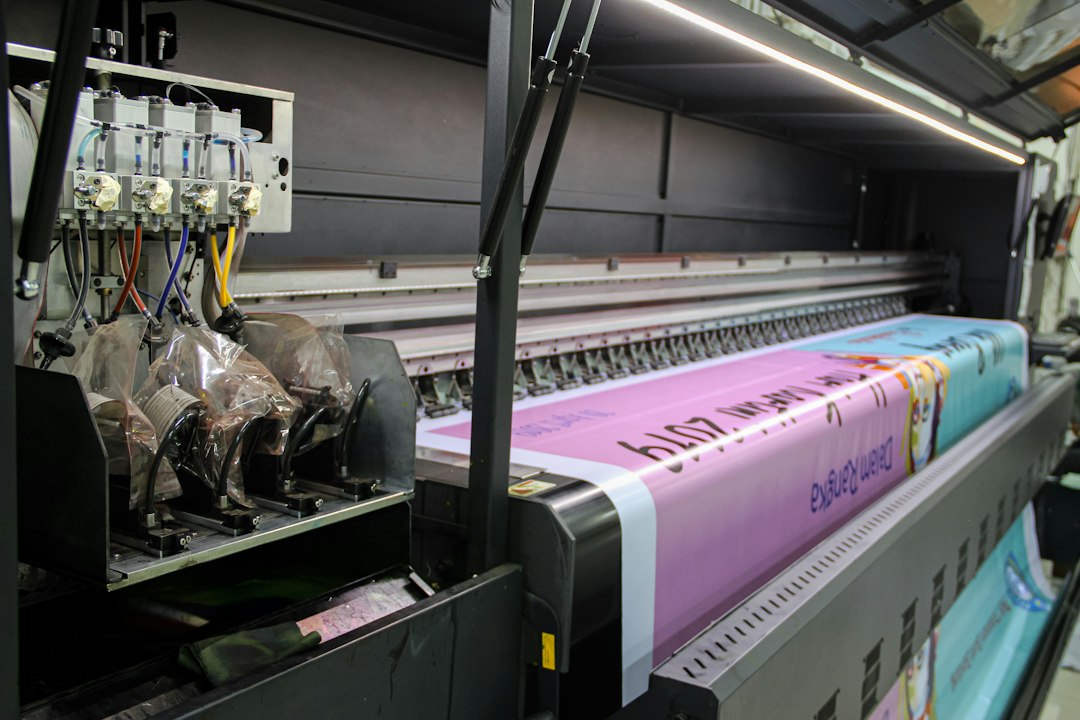
Banner and flex media
Flexible banner media is commonly used for promotional banners, event graphics and selected outdoor displays. Check the intended installation, required finishing, eyelets or hemming, wind exposure and viewing distance. The printer should recommend a media grade and production method suited to the job.
Printable vinyl and backlit film
Printable vinyl is used for many sign and display applications, including selected wall, window and vehicle graphics. Backlit film is designed for illuminated display systems, where the light source behind the graphic affects how colours and brightness appear. These materials are not interchangeable: tell the printer whether the graphic will be viewed in daylight, under indoor lighting or with illumination from behind.
Fabric, photo paper and display media
Fabric can be suitable for selected event backdrops, flags and tension displays where portability or reduced glare matters. Photo paper is commonly chosen for detailed indoor images and presentations. For a roll-up or event background, check the complete display system—not only the printed surface—so the material, size and finishing work together. See backdrop printing and the roll-up banner guide for related display applications.
5. Rigid boards and sign-making materials
Rigid materials keep their shape and are used for panels, displays, directional signs and branded interiors. Common options include PVC foam board, acrylic, aluminium composite panels and corrugated plastic board. Each has different weight, rigidity, appearance, fabrication requirements and suitable exposure conditions.
PVC foam board is lightweight and can be useful for many indoor display applications. Acrylic offers a clean, polished appearance and is often selected for reception signs, lettering and premium displays. Aluminium composite panels are used where a more rigid panel construction is required. Corrugated plastic board can work for lightweight or temporary signage. The final choice also depends on thickness, support, edge finishing, fixing method and the sign’s location.
For outdoor signage in Kuwait, tell your printer or sign maker whether the panel will receive direct sunlight, heat, wind, dust or frequent cleaning. Ask about the suitability of the complete system—including the printed surface, ink, protective finish, adhesive, frame and installation—not only the board itself. Explore outdoor signage or acrylic sign options for examples of sign applications.
6. Packaging materials: kraft, folding carton and corrugated board
Packaging must do more than carry a logo. It needs to protect the product, hold its shape, support transport and present the brand clearly. The right material depends on product weight, dimensions, storage, delivery conditions, opening experience and the type of finish required.
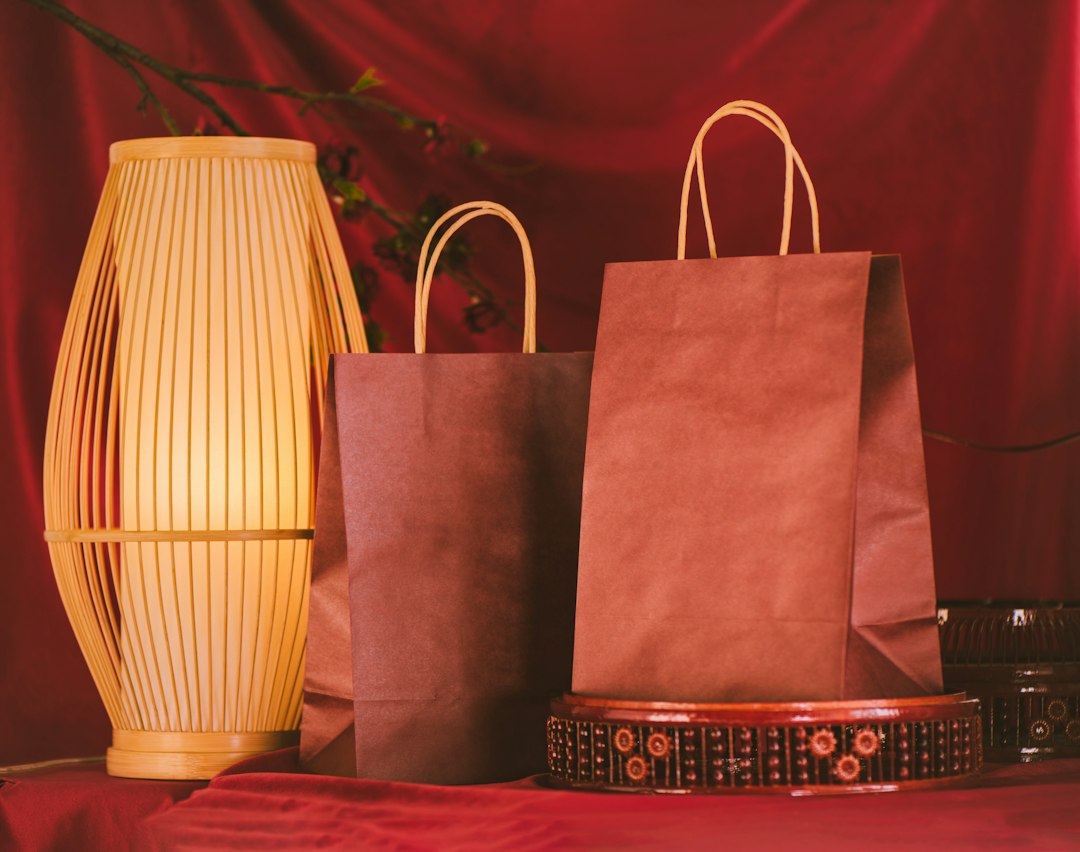
Kraft paper
Kraft paper is associated with a natural, understated look and is used for shopping bags, wraps and selected packaging. Its strength and print appearance depend on the grade, weight, colour and construction. Dark or highly detailed artwork may reproduce differently on brown kraft than on a white coated surface.
Folding carton and duplex board
Folding carton materials are converted into boxes and sleeves for retail and product packaging. Duplex board commonly has a coated printable face and a different reverse surface. Select the board based on the box structure, product weight, folding lines, print coverage and required finish. A sample or dummy is useful before approving a large production run.
Corrugated board
Corrugated board has a fluted middle layer between liner sheets. It is often selected when cushioning, stacking or shipping protection is important. The board grade and construction should be matched to the product and distribution conditions. A decorative carton and a shipping box may need very different material structures.
For branded packaging, compare custom box printing with custom paper bag printing. Provide the product dimensions and approximate weight so the printer can recommend a practical construction.
7. Printing finishes that change the final result
The material is only one part of the finished product. A finishing process can change appearance, feel, protection and usability. Common options include:
- Gloss or matte lamination: adds a surface layer and changes the look and feel of suitable printed sheets.
- Spot UV: applies a glossy highlight to selected areas of a design when the stock and process support it.
- Foil stamping: adds a metallic or specialty accent to selected details.
- Embossing or debossing: creates a raised or recessed impression in the material.
- Die cutting and creasing: shape the product and help prepare sheets for accurate folding.
- Binding: joins printed pages into booklets, reports, notebooks or books.
Not every material supports every finish. Ask the printer to confirm compatibility and whether a crease, test sample or protective layer is recommended for your design.
8. How to choose the right printing material: a simple checklist
Before requesting a quotation, prepare these details. Clear specifications reduce guesswork and make it easier to compare options.
- Define the purpose: Is it a business card, brochure, label, banner, sign, box or shopping bag?
- Explain where it will be used: Indoor or outdoor? Will it face sunlight, moisture, friction, frequent handling or cleaning?
- Confirm size and construction: Share final dimensions, quantity, single- or double-sided printing, folds, mounting and any special shape.
- Choose the look and feel: Decide whether you need a natural, smooth, glossy, matte, textured, flexible or rigid finish.
- Ask about production compatibility: The paper, film or board must suit the printing technology, ink and finishing process.
- Review a proof or sample: Check colour, text, material feel, adhesive, folding and finishing before approving production.
- Set a realistic budget and deadline: Compare the complete specification rather than comparing price alone.
9. Common mistakes to avoid when selecting printing materials
- Choosing the highest GSM automatically: heavier stock is not always better; flexibility, thickness, folding and intended use matter.
- Approving colour from a screen only: displays and printed materials reproduce colour differently. Request a proof for colour-critical work.
- Ignoring the application surface: a sticker adhesive must match the surface and expected conditions.
- Using an indoor material outdoors: confirm that the full print and installation system is designed for the exposure.
- Forgetting folds and finishing: thick paper may need creasing, while boxes need suitable structural design and tolerances.
- Ordering without checking a sample: a physical sample can reveal differences in texture, stiffness, opacity and finish that a screen cannot show.
10. Printing materials in Kuwait: what should local businesses consider?
For projects used in Kuwait, explain the actual environment to your printer. An indoor menu, a shopping bag, a window sticker and an outdoor sign have different requirements. For outdoor graphics, direct sun, heat, dust, wind, cleaning and installation method can all affect the choice of media and finishing. For packaging, consider storage, delivery and how the product will be handled by customers.
Do not choose a material based only on a product name such as “vinyl”, “PVC” or “premium paper”. Ask for the exact grade or specification, intended application, compatible print process and recommended finishing. When the job is important, review a physical sample or printed proof before approving the full quantity.
Frequently asked questions about printing materials
What are the most common printing materials?
Common printing materials include coated and uncoated paper, cardstock, paperboard, adhesive vinyl, label stock, synthetic films, banner media, fabric and rigid boards such as PVC foam board and acrylic. Packaging may use kraft paper, folding carton or corrugated board.
What does GSM mean in printing?
GSM means grams per square metre. It measures the weight of a square metre of paper or board. It does not directly measure thickness, so ask for a sample or thickness specification when the feel or stiffness is important.
Is higher GSM paper always better?
No. Higher GSM means more weight per square metre, but the best paper depends on the job. A flyer may need to stay light and easy to fold, while a business card needs more body. Choose by purpose, handling and finish—not by GSM alone.
Which material is best for business cards?
Business cards are commonly produced on a suitable coated or uncoated card stock, often around 300–350 GSM. The right option depends on the desired stiffness, texture, print process and finish. Confirm the actual stock with your printer before ordering.
Which printing material is suitable for outdoor signage in Kuwait?
There is no single material for every outdoor sign. The correct choice depends on the sign structure, direct sun, heat, wind, installation surface, viewing distance and expected service life. Ask for a recommendation covering the board, print, protective finish, fixings and installation as one system.
Can the same material be used for every printing method?
No. Materials have to be compatible with the printing technology, ink and finishing process. A stock suitable for one digital press may not work in the same way on another process. Share the final application and artwork so the printer can confirm compatibility.
What information should I send to get a printing quotation?
Send the product type, size, quantity, artwork or reference, single- or double-sided requirement, intended use, preferred material or finish, and deadline. Mention whether the item will be used indoors or outdoors. A complete brief helps the printer suggest a suitable specification.
Need help selecting printing materials in Kuwait?
The right material helps your printed product look professional and perform as intended. Printex Printing Press provides printing and branding solutions for business and promotional needs in Kuwait. Share your product, size, quantity and intended use, and the team can help you review suitable material and finishing options.
Explore more: printing services | digital printing | box printing | bag printing.
Image credits: Unsplash contributors credited in the media library.